


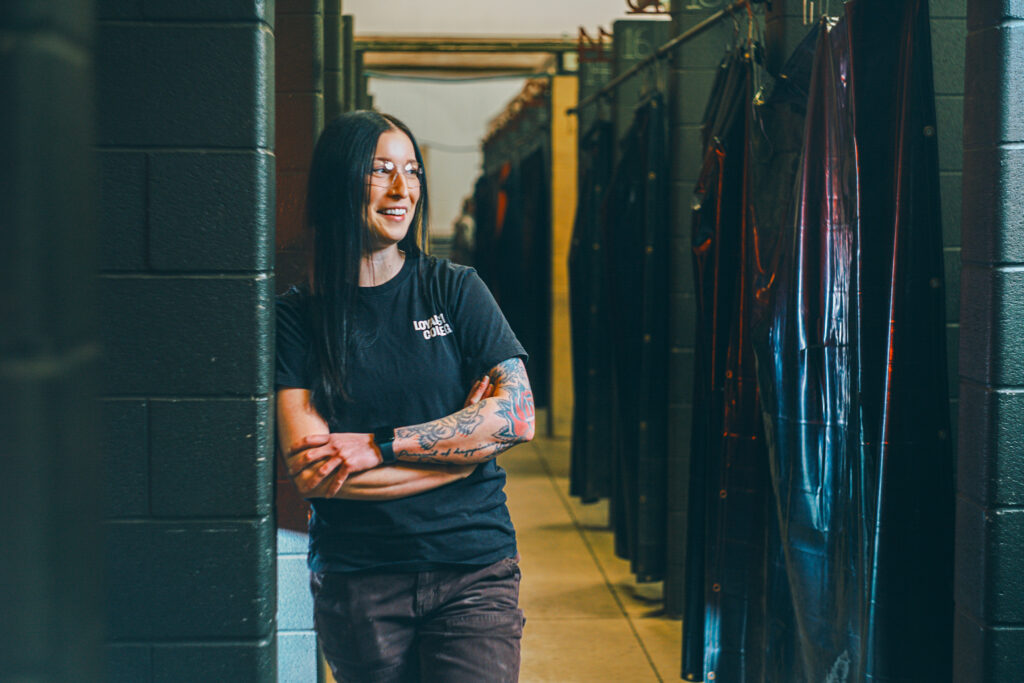
Working in the Trades: Emma Holdbeck
Born and raised in the Bay of Quinte, Emma Holdbeck, a Red Seal certified Welder 456A, is now a professor at Loyalist College, in the Welding Techniques and Fabrication Technician programs, which she is an alumna of.
Fueled by her passion for cars and automotive sports, Emma was drawn to the trades because they allowed her to learn and work with her hands, flex her creativity, and be a part of something bigger.
“I enjoy working with my hands; it’s how I learn,” Emma explained. “I love being creative, adaptable, and getting gratification from seeing a final product that I’ve worked on or taken part in. I’m not someone who can read it and learn it,” Emma continued. “I am a hands-on, trial-and-error type of person. The self-discipline that comes with this career choice has also been very rewarding and creates pride for my parents, seeing their daughter be fearless and self-sufficient.”
While attending Loyalist College, Emma worked for Alliance Custom Fabrication in Belleville as a summer student, working on 3D drafting and designing. She also worked onsite at P&G and Redpath Sugar to maintain, repair and redesign equipment.
After graduating from Loyalist College, Emma started a business with a friend doing contract work. They took on a six-month government contract at Millhaven Institution, converting a wing of the prison into a shower facility.
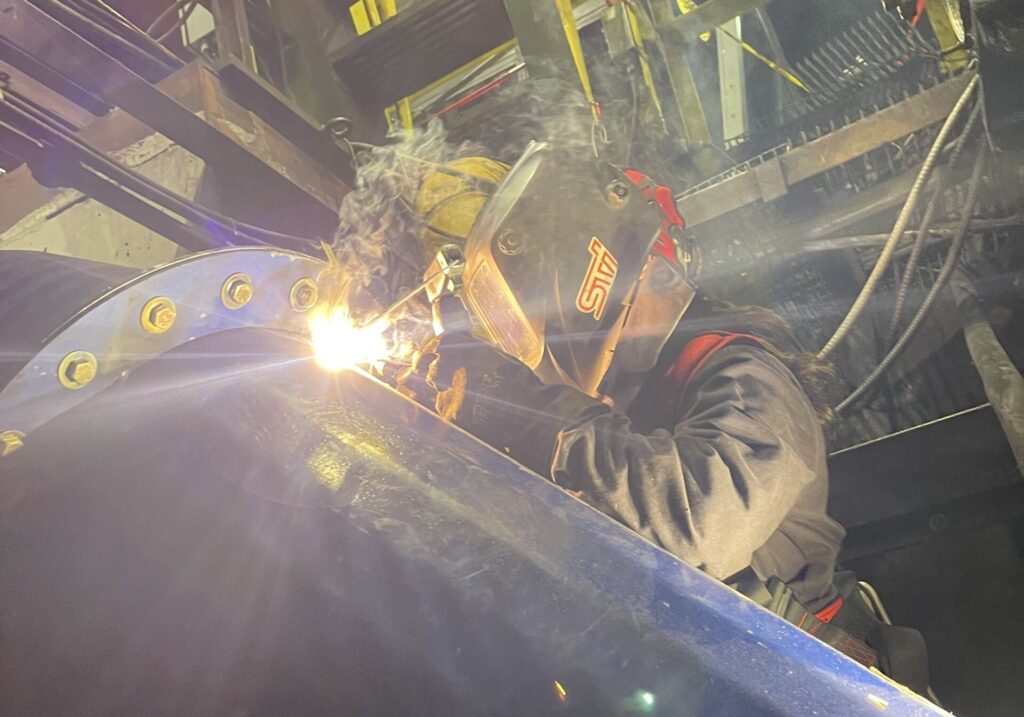
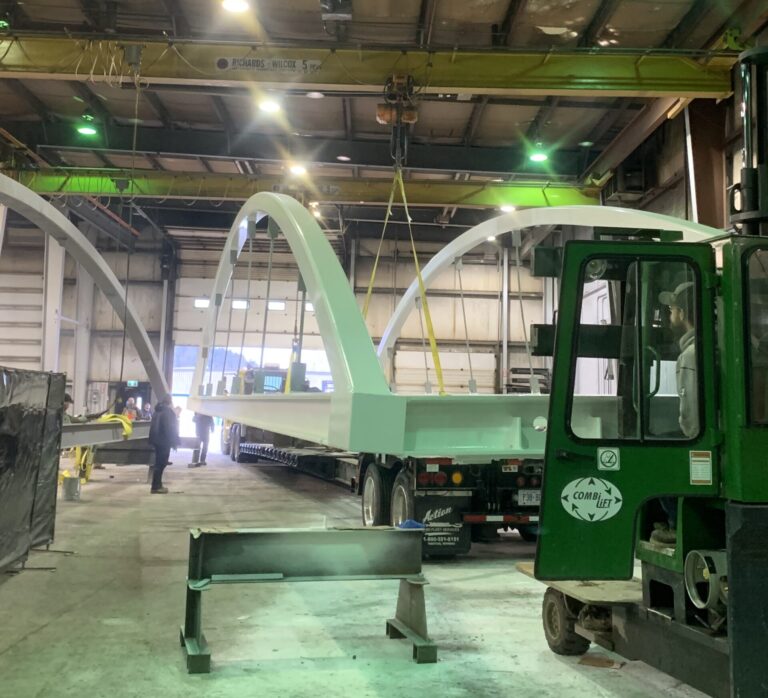
Once that contract was completed, Emma worked on a job raising the roof of a local building by 20 feet, where she gained experience using CNC equipment and ironworking. She also worked on the Catherine St. pedestrian bridge in Downtown Belleville.
Her last full-time job before becoming a professor was at Kilmarnock Enterprise, where she broadened her skills again by working on millwright-led projects.
What Emma loves most about working in the trades is that she’s always learning something new and the connections she’s made throughout her career.
“I love learning something new every day, and creating long-lasting friendships and support systems within the crews I’ve worked with,” Emma told us. “Sometimes you see your coworkers more than your own family. With my current position, I have far more time for family, friends, and a stronger commitment to hobbies. When I was working two jobs, I was working on average 60 hours a week or more, but those were the times of major self-discipline,” Emma explained. “I understood the sacrifice of time with family for high earnings. Having both perspectives now, it makes me appreciate the value of time with loved ones, and I’m proud of myself for the dedication I had to growing my skills and my career to be able to have this lifestyle now.”
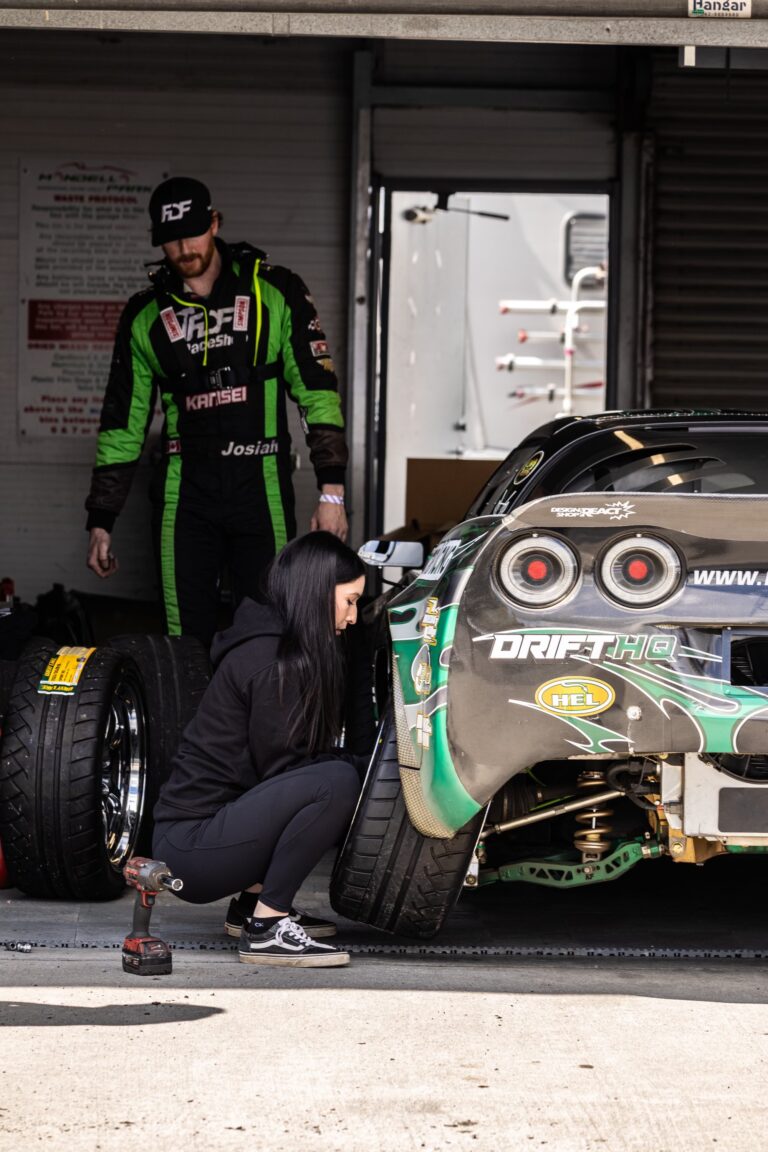
In her spare time, Emma and her fiancé, Josiah, are both into auto sports, specifically drifting.
“I have a Nissan 350Z that I take to the track to better my skills as a driver, but mostly, I support my fiancé, Josiah Fallaise, who owns FDF Raceshop, and I am part of his team for professional drift events,” Emma said. “His commitment, dedication and contribution to Quinte West with his business motivates me to have a similar impact,” Emma said. “Drifting incorporates everything I enjoy. Welding, fabricating, insanely built cars, reverse engineering and designing parts, and the great community of people,” she continued.

When asked what advice she would give to someone considering a career in the trades, Emma had this to offer: “Keep a positive and open mindset. No question is a silly question since everyone has been in the position of not being sure, and the best course of action is to ask for help, advice, or to be shown. Making a mistake is part of the job; it’s how you learn from it that defines you as a tradesperson.”
If you’re interested in learning more about the skilled trades, visit Skilled Trades Ontario or find a list of all the skilled trades programs Loyalist College has to offer!
Interested in sharing your story with Work in Quinte? Click here to talk to Garrett!